How to Launch Own Label Coconut Milk and Cream in Tetra Pak: Specs, Sizes, Print MOQ and Timeline
Planning to launch own label coconut milk or cream in Tetra Pak cartons? This guide from a Sri Lankan coconut milk manufacturer walks you through the five launch decisions (milk or cream, the spec, carton sizes from 65 ml to 1 L, the print MOQ per design and your first container), with print runs converted to liters, a launch timeline and US label requirements.
By the CBL Product Team
·
Published
·
·
8 min read
A Tetra Pak own label launch comes down to print runs. The print MOQ is set per carton design, from 79,000 cartons for 1 L to 1,060,000 for 65 ml, which is about 57,000 to 79,000 liters of coconut milk per run, and every extra size or language adds another run. Most brands start with one product in one or two sizes: 330 ml, or 500 ml with a resealable cap, for the cooking aisle, 200 or 250 ml for single recipes, and the 1 L with a cap for food service and cash-and-carry. Fat can be set from 5% to 30%, so coconut milk (about 5 to 22%) and coconut cream (about 22 to 30%) come off the same lines. Plan for about 3 months from brief to first shipment and about 8 weeks for repeat orders, plus ocean freight. Own label is growing in the US. Store brands took a record 21.3% of US dollar sales across all outlets in 2025, and coconut milk drinks grew while most plant-based milks stood still. CBL fills both products in Sri Lanka and Indonesia: Tetra Pak coconut milk and cream, private label coconut products built on CBL formulations, and our canned vs aseptic coconut milk guide if you are still choosing a format.
To launch own label coconut milk in Tetra Pak cartons, you make five decisions: milk or cream, the spec, the carton sizes, how many carton designs you can fund, and how the first container ships. This guide takes them in that order, with the print-run math, a launch timeline and what US buyers look for. It comes from CBL Global Foods, which fills Tetra Pak coconut milk and cream in Sri Lanka and Indonesia for retail brands, importers and B2B buyers across the US.
Key takeaways
- Start narrow. One product, one or two carton sizes and one design keep the first print commitment small.
- The print MOQ is set per carton design. One print run holds about 57,000 to 79,000 liters of coconut milk, depending on the carton.
- Plan for about 3 months to a first shipment and about 8 weeks for repeat orders, plus ocean freight.
- Fat can be tailored from 5% to 30%. Coconut milk sits at about 5 to 22% and coconut cream at about 22 to 30%.
- Own label is growing in the US. Store brands took a record 21.3% of US dollar sales across all outlets in 2025, and coconut milk drinks grew while most plant-based milks stood still.
Decide what your coconut milk brand stands for
Choose your position before you choose a supplier. It decides which certifications you need and what you can print on the carton. Positions can be combined, as long as one supplier holds every certification you plan to print.
Position | What it needs from the supplier |
Conventional | Consistent fat, flavor and color from batch to batch at the lowest cost per liter; the widest choice of fat levels and carton sizes |
Natural | No preservatives or additives |
Clean label | A stabilizer-free recipe that stays blended through homogenization |
Organic | A USDA Organic certificate that carries over to your carton |
Premium biodynamic | Demeter or Naturland certification, which is rare at commercial volume |
Ethical | Fairtrade certification and traceability back to the farm |
Vegan and lactose-free | A plant-based recipe with no dairy ingredients |
Halal or Kosher | Certification held by the manufacturer |
Single origin | One origin, documented by batch: Sri Lanka or Indonesia |
Convenience | Small cartons of 200 or 250 ml for single recipes |
Milk, cream or both: choose your launch range
Launch with one product unless you already sell both, because every product and every size needs its own carton design. Pick the one your first buyer will reorder, then add the second once it sells.
Your first buyer | Start with | Why |
Home cooks buying for curries, soups and sauces | Standard coconut milk | The everyday shelf product, with the widest use |
Shoppers making drinks and smoothies | Light coconut milk | A thinner body suits blending and drinks |
Bakers, dessert makers and vegan cooks | Coconut cream | Higher fat for whipping, frozen desserts and baking |
Restaurants and cash-and-carry | 1 L coconut milk | One size, the lowest packaging cost per liter |
Fat grades and what each is used for are set out in our aseptic Tetra Pak buyer's guide. If you are still deciding between cartons, cans and bulk, read canned vs aseptic coconut milk first.
Write the spec brief: custom coconut milk formulation
A written spec saves one full round of samples. CBL can tailor fat from 5% to 30%, viscosity, stabilizer use, certification and origin, so decide each line below before you ask for samples.
Spec line | What to decide | Why it matters |
Fat target | A percentage and an acceptable range | Sets texture, use and cost per liter |
Viscosity | How thick the milk should pour | Changes how it behaves in sauces and drinks |
Stabilizer | None, or a named stabilizer | Standard CBL coconut milk has no additives; stabilized versions are made only for specific recipes |
Certification | Conventional, organic, Fairtrade, Demeter or Naturland | Decides which claims go on the carton |
Origin | Sri Lanka or Indonesia | Affects supply planning and the pack sizes available |
Carton and closure | Size and cap | Set by your channel, covered below |
Label market | US, Canada, EU, UK or another | Decides the language and panels on the artwork |
CBL homogenizes the milk to limit separation without stabilizers or emulsifiers, so a stabilizer-free spec is realistic. Some oil still rises to the top in any coconut milk, so say so on the carton with a shake-well line.
The cheapest way to settle the spec is to test two fat levels in your own recipe. Contact us for samples at both levels, or request samples online, and ask for the certificate of analysis (COA) so you can see the fat reading behind each sample. Use it to set your pass and fail range for later batches.
Sourcing: why origin and filling at source matter
Coconut milk quality depends on how fresh the coconuts are when they are pressed and how soon the milk is heat-treated and sealed. Filling at origin shortens that gap and removes a handover between the processor and the packer. CBL fills coconut milk and cream in its own facilities in Sri Lanka and Indonesia; our coconut sourcing and supply chain page shows how.
- Steady supply. Sri Lanka harvests year-round, and plantations sit about 20 km from the facility.
- Two origins. Running Sri Lanka and Indonesia together protects supply against a poor harvest or a shipping disruption.
- Freight. Ocean freight from Colombo to US East and West Coast ports takes roughly 5 to 7 weeks.
How to choose a coconut milk co-packer
Compare suppliers on these eight points before you ask for a quote.
- Fills in its own plant. Every handover between companies is a gap in traceability.
- Audited food safety. Look for a BRCGS or FSSC 22000 certificate and read the audit grade. CBL holds BRCGS AA++.
- Certifications it holds itself. Organic, Demeter, Fairtrade, Halal and Kosher claims are valid only if the manufacturer holds them.
- Runs your carton. Confirm the line fills your size and closure.
- Batch COAs. The certificate should show the fat reading for your batch, not typical values.
- US import documents. Coconut milk in a sealed carton is a shelf-stable low-acid food, so ask for the FDA food facility registration, the canning establishment registration with filed processes, documents for your FSVP file and, for organic, a USDA import certificate. [confirm]
- Artwork and label review. The team should check your artwork against your market's rules before printing.
- Samples before commitment. Taste the milk in its real carton and test it in your own recipe before you order.
For the full brief-to-shelf process, from samples to print approval, see our private label coconut products page.
Tetra Pak sizes: match the carton to your channel
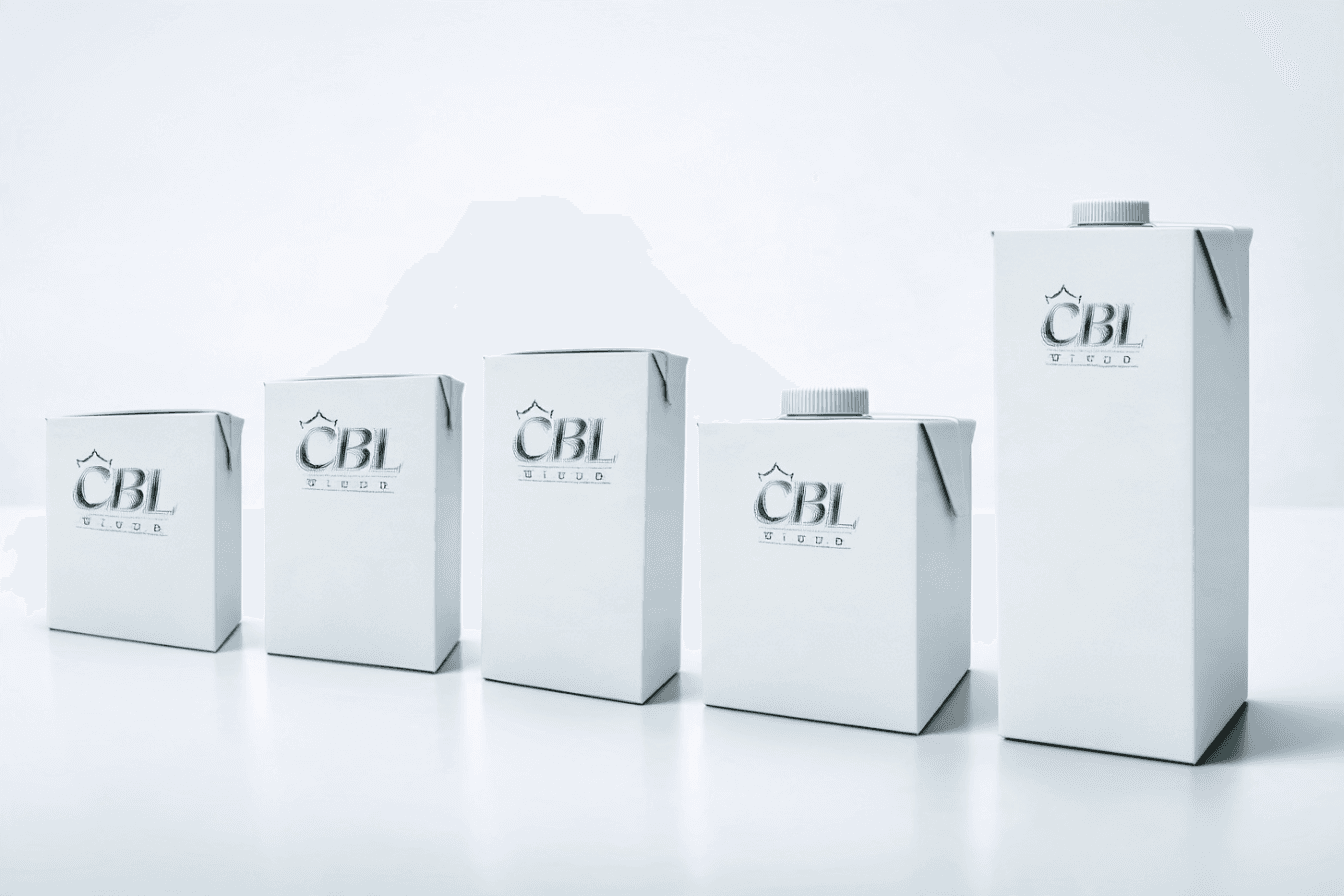
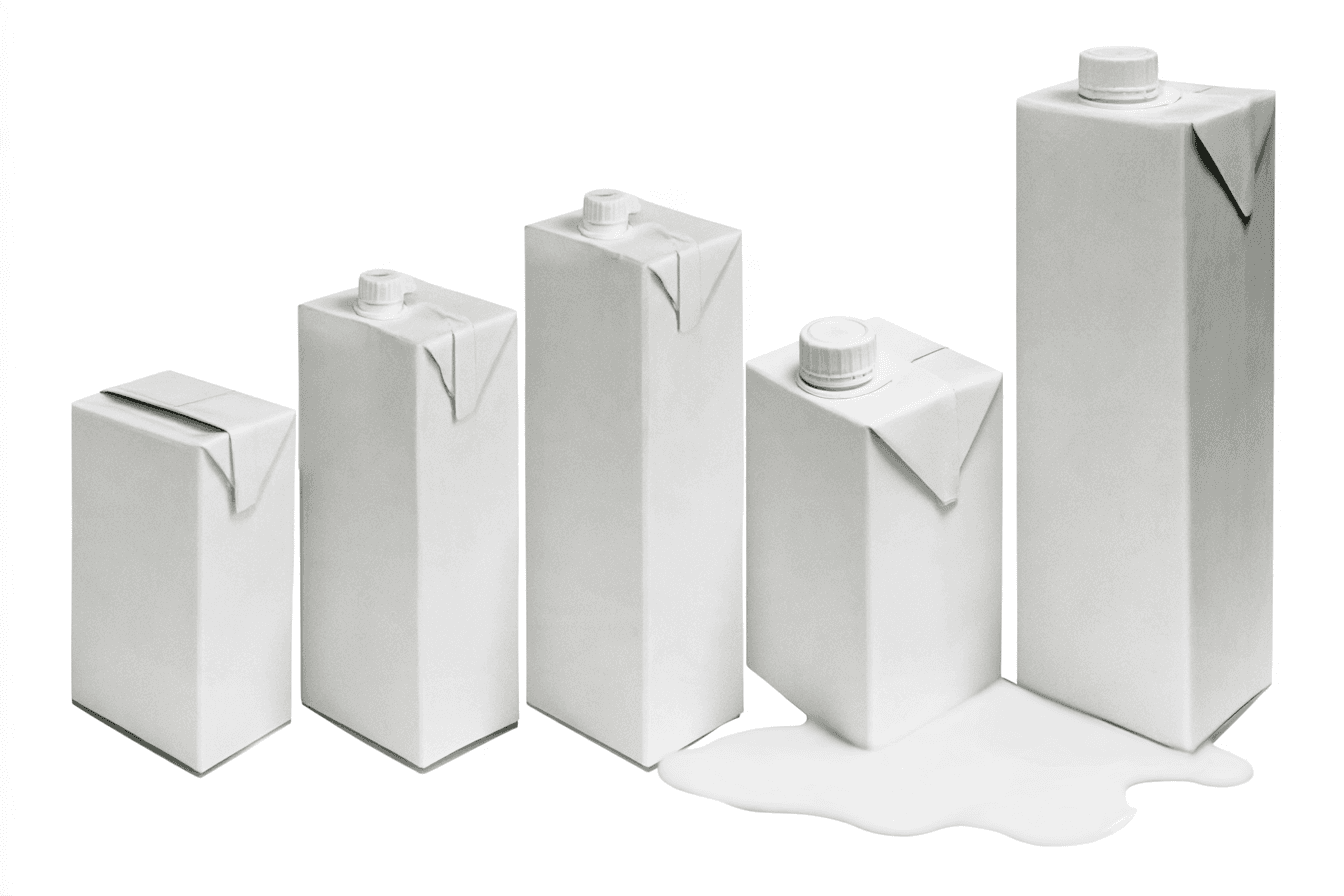
Choose the carton for where it will sit, not for the lowest MOQ. Every size and closure is listed on the Tetra Pak coconut milk and cream page; this table shows how to choose between them.
Your channel | Sizes to consider | Why |
Supermarket cooking aisle | 330 ml Tetra Brik; 500 ml Tetra Square with tethered cap | The main household sizes; the 500 ml cap lets shoppers reseal |
Foodservice, cash-and-carry and family packs | 1 L Tetra Square with tethered cap | Lowest packaging cost per liter, resealable |
Single recipes and small households | 200 ml or 250 ml Tetra Brik | Fits one dish with no leftovers |
Sampling, impulse and premium shelves | 65 ml Tetra Classic Aseptic Slim | Small and giftable, but the highest packaging cost per liter |
Two more things to ask about. The 65 ml Slim is filled in Indonesia, so confirm the origin if you need Sri Lankan fill for that size. Tetra Brik Aseptic Base and Edge cartons are also listed for custom packaging, so ask which sizes are open to you.
Print MOQ for Tetra Pak: plan by design, not by order
The print MOQ is the number of cartons printed per design. It is a different number from your order quantity, and it multiplies with every size and language you add. The table converts each print run into liters of coconut milk, which is the number your sales forecast works in.
Carton | Liters of coconut milk in one print run |
65 ml Slim | about 68,900 |
200 ml Tetra Brik | about 67,000 |
250 ml Tetra Brik | about 64,250 |
330 ml Tetra Brik | about 58,400 |
500 ml Tetra Square, tethered cap | about 57,000 |
1 L Tetra Square, tethered cap | 79,000 |
The cartons per design for each size are in the MOQ answer on the Tetra Pak coconut milk and cream page; the liters above are those print runs converted to volume. Confirm the current figure for your carton when you ask for a quote. [confirm]
Three rules for planning around them:
- Count designs, not sizes. Each size in each label language is a separate design. Milk and cream in one size are two designs. One size in English and Spanish is two designs.
- The smallest commitment depends on the unit. In cartons, the 1 L is the lowest at 79,000. In liters, the 500 ml is the lowest at about 57,000. Choose by the number your forecast can support.
- Check how long one run lasts. Divide the run by your weekly carton sales. At 1,000 cartons a week, a 79,000-carton run is about 79 weeks of volume. If that is longer than you can forecast, start with one design in one size.
Order size is separate. Our private label page says orders for existing formulations start from one pallet. Ask three things when you quote: does that apply to a new carton design, how are unused printed cartons stored, and how are they invoiced.
Work out your first print run
Send us your channel, the carton size you have in mind and your forecast volume. Our export team will recommend a size and design plan, confirm the MOQ for each design, and reply within 24 hours.
Certifications and claims you can put on the pack
Your carton can carry only the claims your manufacturer's certificates cover, so choose claims before you choose a design. Every certificate CBL holds is listed on our quality and compliance page. What matters for a launch is how each claim changes your design count. Check that each certificate covers your carton size and origin before you print.
Claim on pack | Certification | What it does to your launch |
Organic | USDA Organic (NOP), EU Organic, JAS Organic | Organic and conventional cartons are separate designs; the USDA seal needs a certifier statement |
Biodynamic | Demeter | A separate design from standard organic |
Organic with social standards | Naturland | A separate design |
Fair prices for farmers | Fairtrade | A separate design; confirm the mark-use rules with CBL |
Religious dietary | Halal, Kosher | Usually one mark set across designs, if the certificate covers the carton |
Artwork and approvals for coconut milk cartons
CBL's studio builds the print-ready file to the Tetra Pak dieline. The four-step artwork process and the roughly 5 business day approval are set out on our private label page, so they are not repeated here. Settle these coconut milk decisions before you send the brief:
- Product name. Whether the pack says coconut milk or coconut cream, and the fat percentage you print beside it. Naming rules differ by market, so have your compliance contact check it.
- Shake-well and storage lines. Natural oil separation is normal. Add a shake-well line and the opened-pack instruction: refrigerate at 4 °C (39 °F) or below and use within 4 days.
- Certification marks. Use only marks the certificate covers; see the claims table above.
- Languages. Every language is a separate design and a separate print run.
US label checklist for coconut milk cartons
Check the carton against this list before you approve the artwork:
- Statement of identity, plus an ingredients list
- Net contents in US customary and metric units, for example 16.9 fl oz (500 ml)
- Nutrition Facts panel in the current FDA format
- Country of origin, storage instructions and a date code
- Name and address of the manufacturer, packer or distributor
- USDA Organic seal and certifier statement, if the product is organic
- Allergen line: FDA's January 2025 guidance no longer treats coconut as a major tree-nut allergen, so remove any "Contains: tree nuts (coconut)" line carried over from older artwork. [confirm with your regulatory adviser]
Canada, the EU, the UK and other markets have their own rules, so ask for a review against each market you sell in.
Timeline: from brief to first container
Plan for about 3 months from brief to first shipment, then ocean freight. The two figures CBL publishes fit together: about 4 weeks of samples, quote and artwork, plus 6 to 8 weeks of production once artwork is approved, comes to 10 to 12 weeks. Repeat orders ship in about 8 weeks.
Stage | When | What happens |
1. Brief | Day 1 | You send carton size, fat target, certification and target market. CBL replies within 24 hours. |
2. Samples and spec | Weeks 1 to 2 | A matched sample and COA arrive. You test them in your recipe and lock the spec. |
3. Quote and design plan | Weeks 2 to 3 | You receive the price per carton, the MOQ for each design, the lead time and the Incoterm. |
4. Artwork | Weeks 2 to 4 | The studio builds files to the dieline. Compliance review and approval take about 5 business days if comments are cleared quickly. |
5. Printing and production | About weeks 5 to 12 | Cartons are printed, and your coconut milk is filled, tested and packed on pallets over 6 to 8 weeks. |
6. Shipment | At release | Export documents and the COA travel with the container. |
7. Ocean freight | About 5 to 7 weeks from Colombo [confirm for your port] | The container travels to your US port; add time for customs and delivery. |
The long stage is printing. Anything that slips in artwork moves the whole launch, so send final copy, languages and certification marks with the brief.
Planning your first container
Three shipping choices change your landed cost and the condition of the cartons on arrival: how the order travels, how it is loaded, and which container carries it. Liquid cartons are heavy, so a container usually reaches its weight limit before it runs out of space. The FAQs below cover container fill (FCL or LCL), loading styles, pallet types and container types. Before you quote, ask CBL for cases per pallet and pallets per container for your carton size, because those figures set your freight cost per carton.
What to ask for in your quote
- The price per carton by fat level and size
- The MOQ for each design, and the order MOQ for each shipment
- The lead time for the first shipment and for repeats
- The Incoterm and named port
- Pallet type, loading style and container type
- Sample cost and what the sample includes
- A COA with each batch, and the certification documents for your claims
- How unused printed cartons are stored and invoiced
Launch mistakes to avoid
- Too many designs at launch. Two sizes in two languages is four print runs.
- Choosing a size by MOQ alone. The smallest number may not suit your shelf or your channel.
- Locking the spec without a recipe test. Fat and viscosity are easy to change before printing and costly to change after.
- Leaving label compliance to the end. A late correction repeats artwork approval and can delay printing.
- Ignoring the receiving warehouse. Some warehouses will not take floor-loaded containers or need a specific pallet size, so check before you choose a loading style.
Why brands launch with CBL Global Foods
CBL Global Foods sells coconut products under its own retail brands and makes coconut milk and cream for retailers and brand owners under theirs, from formulation to the filled, labeled carton. This is how that answers the risks of a first coconut milk launch.
Launch risk | How CBL reduces it |
Fat and texture drift between batches | Every batch is tested in-house and shipped with a COA showing its fat reading |
Oil separation on the shelf | Homogenized milk and cream, stabilizer-free by default, with stabilized versions only where a recipe needs them |
Two products, two suppliers | Coconut milk and coconut cream from 5% to 30% fat on the same Tetra Pak lines, 65 ml to 1 L |
Claims a retailer will not accept | BRCGS AA++, FSSC 22000 and ISO 22000, plus organic, Demeter, Naturland, Fairtrade, Halal and Kosher held by CBL itself |
Artwork rejected late | An in-house studio builds to the dieline and checks the label against US labeling rules |
A supply gap after launch | Two filling origins, Sri Lanka and Indonesia |
Shipments held at US entry | FDA registration, documents for your FSVP file and USDA organic import certificates for organic shipments |
A slow start | A reply within 24 hours, and samples before you commit to a print run |
Ways to work with CBL
Private label puts your brand on CBL's formulation. OEM manufacturing fills your own recipe to your spec. Food manufacturers who need unbranded product in larger formats can look at bag-in-box, drum and IBC supply, and restaurants and distributors can ask about 1 L cartons and foodservice packs. Cans suit some ranges better, and our canned coconut milk and cream page covers that route.
What to include in your enquiry
Beyond the usual product and certification details, a launch enquiry should state:
- Product: coconut milk, coconut cream or both, with a target fat percentage
- Carton and channel: the size and closure, or the channel so we can recommend one
- Designs: the number of sizes and label languages, and your forecast per design
- Market: the states or regions you sell in, the retailers you are pitching and any label review you need
- Shipping: Incoterm, destination port, FCL or LCL, loading style, pallet type and container type
Not sure which carton or fat level fits your launch?
Tell us your channel, volume and target fat. Our export team replies within 24 hours with a size recommendation, a spec sheet and initial terms, and we can send samples before you commit. See our private label Tetra Pak coconut milk and cream.
Frequently asked questions
Yes. Store brands took a record 21.3% of US dollar sales in 2025, and coconut milk drinks grew 12.6% in the year to July 2024 while most plant-based milks were flat. Retail buyers adding own label lines look for a fixed spec, certified supply and import documents, which is what a launch-ready co-packer provides.
There are two numbers. The print MOQ is set per carton design and runs from 79,000 cartons for 1 L to 1,060,000 for 65 ml. The order quantity is separate, and orders for existing formulations start from one pallet. Confirm how the order quantity applies to a new design when you ask for a quote.
Yes, and it keeps your first print commitment lowest. Each size is its own design, so add a second size or a coconut cream once the first is selling.
Plan for about 3 months from brief to first shipment, and about 8 weeks for repeat orders. Ocean freight from Colombo to the US adds about 5 to 7 weeks.
Yes. Fat can be tailored from 5% to 30%, and viscosity profiles and stabilized or stabilizer-free recipes are available. Standard CBL coconut milk has no preservatives or additives.
Private label puts your brand on a coconut milk or cream that CBL already makes. Co-packing, also called OEM, fills your own recipe to your specification. CBL offers both.
Yes. You can send finished artwork or a detailed design brief. The studio fits it to the Tetra Pak dieline and reviews it against your market's label rules before printing.
Yes. Coconut milk and cream are available as conventional, organic, Fairtrade, Naturland or Demeter, and the certifications transfer to your private label with full documentation.
Yes. Many brands launch coconut milk first and add coconut cream or another fat level once it sells, under the same brand. Each product and size needs its own design.
The main costs are the first carton print run and filling, artwork, any certifications you choose, freight and your marketing. The price per carton depends on carton size, fat level, certification, volume and Incoterm. Send us your brief for a quote on your exact specification.
Usually not, because the product name and fat percentage are printed on the carton. Ask whether variants can share a design when you quote.
Up to 18 months unopened at ambient temperature. After opening, refrigerate at 4 °C (39 °F) or below and use within 4 days.
As importer of record you carry the US import duties, including the FSVP file and FDA prior notice. The part you control in a launch is the carton label, so check the artwork against the US label checklist above before you approve print. Our aseptic buyer's guide lists the documents CBL provides.
Container fill is how your cargo shares the container. FCL (full container load) means the whole container is yours, loaded and sealed at origin and handled once. LCL (less than container load) means your pallets share a container with other shippers' cargo; it is consolidated at a depot and handled more times, so transit is slower and the cartons take more handling. LCL is usually the sensible route for a first order near the one-pallet minimum. FCL gives a lower cost per pallet once the order is large enough to fill most of a container, and a 20 ft container of coconut milk is usually limited by weight, at roughly 20 metric tons of product. Ask CBL to quote both so you can compare freight per carton.
- Floor loaded: cartons are stacked by hand directly on the container floor, with no pallets. It fits the most cartons, but loading and unloading take longer, handling damage is more likely, and many warehouses charge for unloading or will not accept it.
- Palletized, industrial: cartons are stacked on standard 1,200 x 1,000 mm pallets and shrink-wrapped. This is the common choice for sea freight and works with forklifts and most US warehouses.
- Palletized, Euro: the same method on 1,200 x 800 mm pallets. More pallets fit in a container, but the size is less common in the US, so your warehouse may have to re-palletize.
- Slip sheets: cartons sit on a thin plastic or cardboard sheet instead of a pallet. That saves pallet weight and height, so more cartons fit, but your warehouse needs a push-pull forklift attachment.
Whichever you choose, confirm that your receiving warehouse can handle it before the order is placed.
- Palletized, sea freight, industrial: the standard single-use wooden pallet, about 1,200 x 1,000 mm. Wooden export pallets must be heat-treated and marked to ISPM 15.
- Palletized, sea freight, Euro: a 1,200 x 800 mm pallet. A 20 ft container takes about 11 of them, against about 10 industrial pallets.
- Palletized, sea freight, CHEP: a leased pool pallet that has to be returned or exchanged. It works only if CBL can load it at origin and your receiving warehouse is in CHEP's network, so ask whether it is available before you plan around it.
Pallet counts per container depend on pallet height and weight, so ask CBL for the actual figure for your carton.
The CBL Product Team
Product development & export · Minuwangoda, Sri Lanka
Written by the team that standardises fat bands on our BRC AA++ lines and answers buyer spec questions daily. Fact-checked against current production specifications, July 2026.