
How Tetra Packaging Facilities Preserve Tropical Goodness
Tetra Pak technology allows tropical products like coconut water and coconut milk to travel from farm to global shelf without losing nutritional value, flavour, or freshness. This article explains how the process works and why it matters for buyers, brand owners, and private label partners.
By the CBL Product Team
·
Published 11 Sept 2026, 03:38
·
Updated September 14, 2026
·
4 min read
On this page
- Why Packaging Is the Final Step That Decides Everything
- How Aseptic Processing Works Inside a Tetra Pak Facility
- The Six-Layer Carton and What Each Layer Does
- Format and Size Choices for Coconut Water and Coconut Milk
- Sustainability, Shelf Life and the Commercial Case for Tetra Pak
- Frequently asked questions
Need exact specs for your recipe?
Talk to the export team- Aseptic Tetra Pak processing eliminates the need for preservatives while extending shelf life up to 12 months at ambient temperature. - Ultra-high temperature treatment combined with airtight packaging locks in the natural electrolytes, flavour, and nutrients of fresh coconut. - Tetra Pak formats reduce food waste and logistics cost compared to chilled or glass alternatives across international supply chains. - Natural Foods CBL offers both coconut water and coconut milk in Tetra Pak formats - available for private label and bulk supply globally.
Key takeaways
- Aseptic processing is not the same as pasteurisation — it goes further, eliminating microbial risk without compromising taste or nutritional profile
- The six-layer Tetra Pak carton structure is specifically engineered to block light, oxygen, and moisture — the three main causes of tropical product degradation
- Tetra Pak formats are compatible with both retail and foodservice specifications, making them the most versatile choice for coconut water and coconut milk buyers
- Choosing the right pack size and format from the outset protects your margin across freight, retail ranging, and consumer use occasions
Why Packaging Is the Final Step That Decides Everything
A coconut water or coconut milk product can be perfectly sourced, carefully processed, and cleanly formulated — and still fail on shelf if the packaging does not protect what is inside. Light, oxygen, and moisture are the three forces that degrade tropical products fastest, and every day a product spends in transit or on shelf is another opportunity for those forces to work against quality.
Tetra Pak technology was developed specifically to solve this problem for liquid food products at global scale. The result is a packaging format that keeps coconut water tasting fresh and coconut milk stable for up to 12 months at ambient temperature — with no preservatives, no refrigeration, and no compromise on the clean-label positioning that makes both products commercially valuable in the first place.
For buyers and brand owners sourcing coconut water or coconut milk for international distribution, the packaging decision is not secondary to the product decision. It is part of the same specification.
How Aseptic Processing Works Inside a Tetra Pak Facility
Aseptic processing is the technology that makes ambient Tetra Pak possible — and it is frequently misunderstood. It is not the same as standard pasteurisation, and the difference matters for both quality and labelling.
In a standard pasteurisation process, the product is heated inside the final container. In aseptic processing, the product and the packaging are sterilised completely separately, then brought together in a sterile environment before sealing. The product never touches a non-sterile surface after heat treatment.
For coconut water and coconut milk, this means the liquid is heated to ultra-high temperature — typically above 135°C for two to four seconds — which eliminates microbial risk almost instantaneously, before the product has time to lose volatile flavour compounds or degrade heat-sensitive nutrients. The result is a product that is commercially sterile, clean-label compliant, and shelf-stable without any of the flat or cooked taste associated with conventionally heated products.
This is the process behind every carton of coconut water and coconut milk we supply in Tetra Pak format. Read more about our product range on our Coconut Water and Tetra Coconut Milk/Cream pages.
The Six-Layer Carton and What Each Layer Does
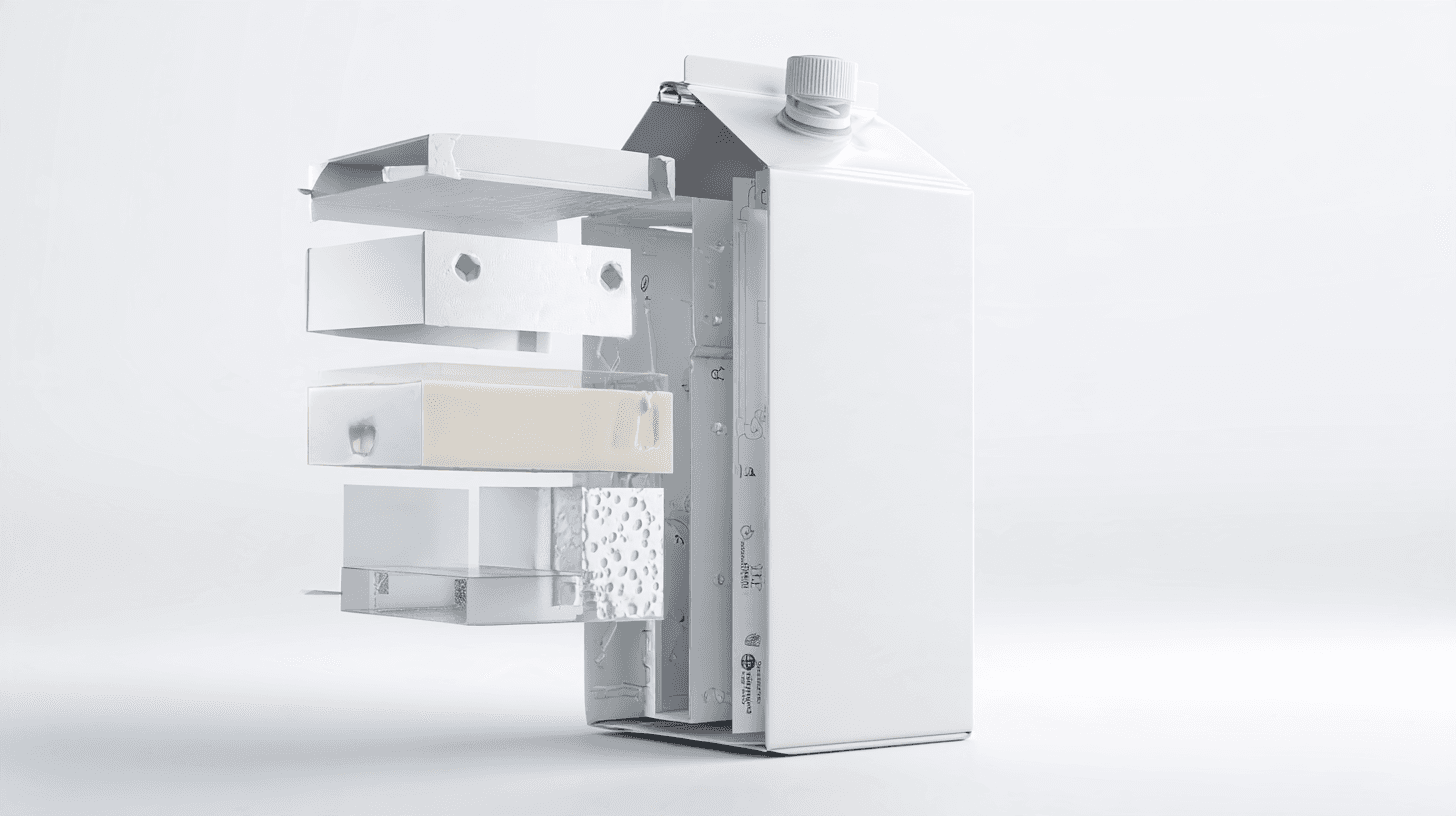
The Tetra Pak carton is not simply a box. It is a precisely engineered six-layer barrier system, and each layer has a specific role in protecting the product inside.
Layer 1 — Outer polyethylene protects against external moisture and provides the printable surface for branding and labelling.
Layer 2 — Paperboard gives the carton its structural rigidity and makes it stackable for retail shelving and freight efficiency.
Layer 3 — Inner polyethylene bonds the paperboard to the aluminium layer and provides a secondary moisture barrier.
Layer 4 — Aluminium foil is the critical barrier against light and oxygen — the two main drivers of flavour degradation and nutritional loss in coconut products.
Layer 5 — Inner polyethylene creates the food-contact layer and seals the aluminium barrier from the product itself.
Layer 6 — Inner sealant layer provides the final hermetic seal that makes aseptic integrity possible.
Together these six layers create a carton that protects tropical products more effectively than glass, PET, or chilled formats across long-haul international distribution.
Format and Size Choices for Coconut Water and Coconut Milk
Not every Tetra Pak carton is the same, and format choice affects everything from retail ranging to consumer use occasions to freight cost per pallet. Getting this decision right at the brief stage saves significant cost and time in the route to market.
For coconut water, the most common retail formats are 250ml, 330ml, and 1 litre. Smaller formats suit on-the-go and single-serve positioning — gym, convenience, and food-to-go channels. Larger formats work for household retail and foodservice accounts where value-per-litre matters more than portability.
For coconut milk, 200ml and 400ml are the dominant retail formats, with 1 litre increasingly common for cooking-led SKUs and premium private label ranges. Foodservice and manufacturing buyers often specify larger aseptic bag-in-box or bulk formats where Tetra Pak cartons are not the most efficient solution.
Private label buyers can specify pack size, carton print, and fill weight as part of a custom brief. Our export team works with buyers from initial specification through to first production run.
Sustainability, Shelf Life and the Commercial Case for Tetra Pak
The commercial argument for Tetra Pak goes beyond product protection. For buyers sourcing coconut water and coconut milk at international scale, the format delivers three advantages that directly affect margin and market access.
Shelf life is the most obvious. Twelve months ambient stability removes the cold chain dependency that makes NFC chilled formats difficult and expensive to distribute globally. A product that can sit in a warehouse in Rotterdam, a distribution centre in Riyadh, or a retailer's backroom in São Paulo without refrigeration opens markets that chilled simply cannot reach.
Waste reduction matters increasingly to retail buyers and sustainability-led brands. Tetra Pak's ambient format means spoilage rates in distribution are significantly lower than chilled alternatives — and the carton material is recyclable in most of the markets we supply.
Freight efficiency is where the margin argument is clearest. Tetra Pak cartons are lightweight, stackable, and compact compared to glass or rigid plastic. More product per pallet, lower freight cost per litre, better carbon footprint per unit — all of which matter when you are moving container volumes across multiple markets.
To understand how our Tetra Pak supply fits your distribution model, visit our About Us page or speak directly with the export team via our Contact page.
Frequently asked questions
The CBL Product Team
Product development & export · Minuwangoda, Sri Lanka
Written by the team that standardises fat bands on our BRC AA++ lines and answers buyer spec questions daily. Fact-checked against current production specifications, July 2026.
Turn this article
into a spec sheet.
- Band recommendation for your exact application
- Filled samples of two fat bands to compare
- Reply from a product specialist within two business days