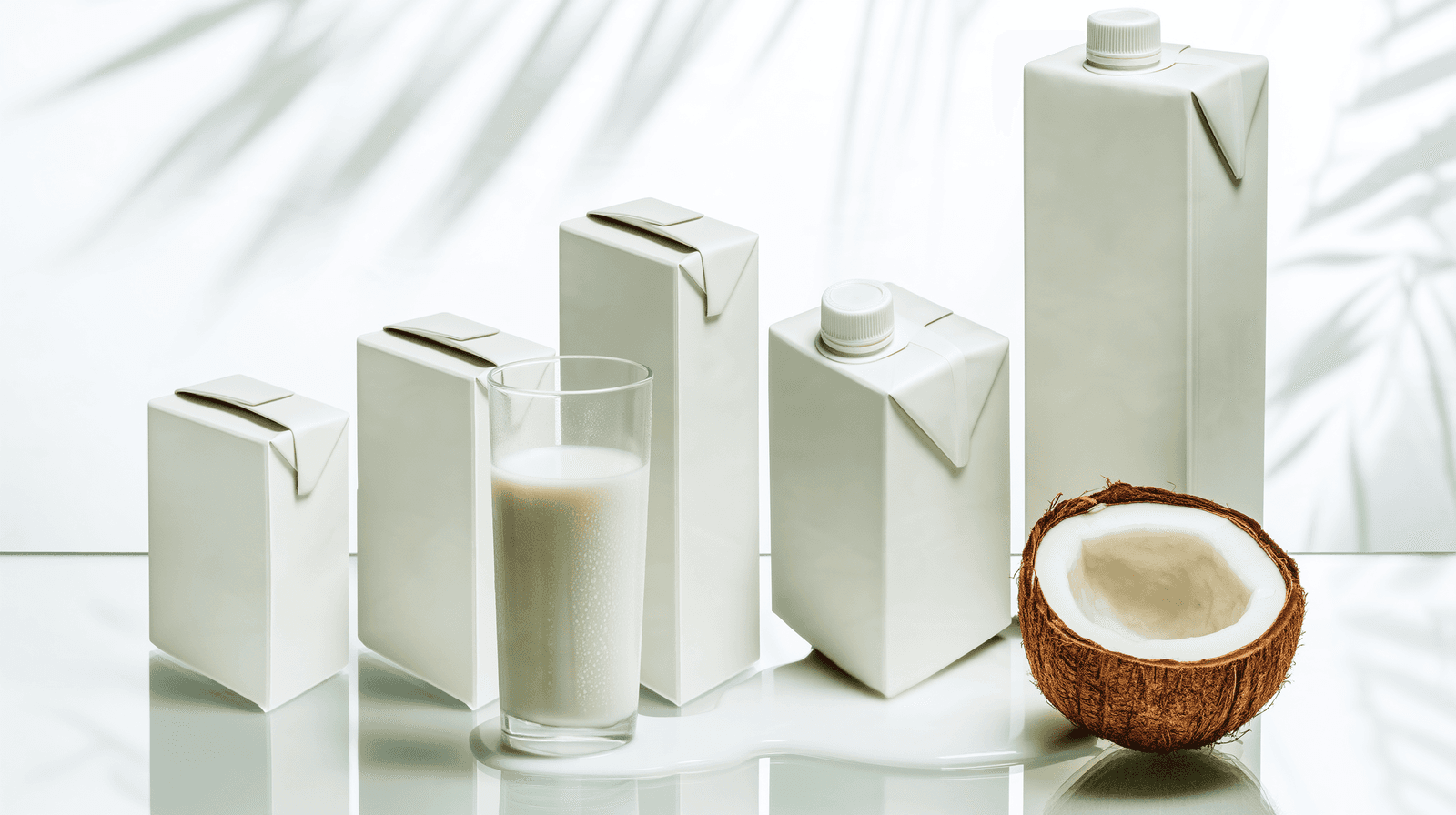
Coconut Milk in Cartons or Cans? A Retailer's Guide to UHT Coconut Milk
Deciding whether your coconut milk range should sit in cartons, cans or both? This guide from a Sri Lankan coconut milk manufacturer shows US retail buyers how each pack performs on shelf, which shopper it serves, and how to build a range that sells both without one eating the other.
By the CBL Product Team
·
Published
·
Updated
·
8 min read
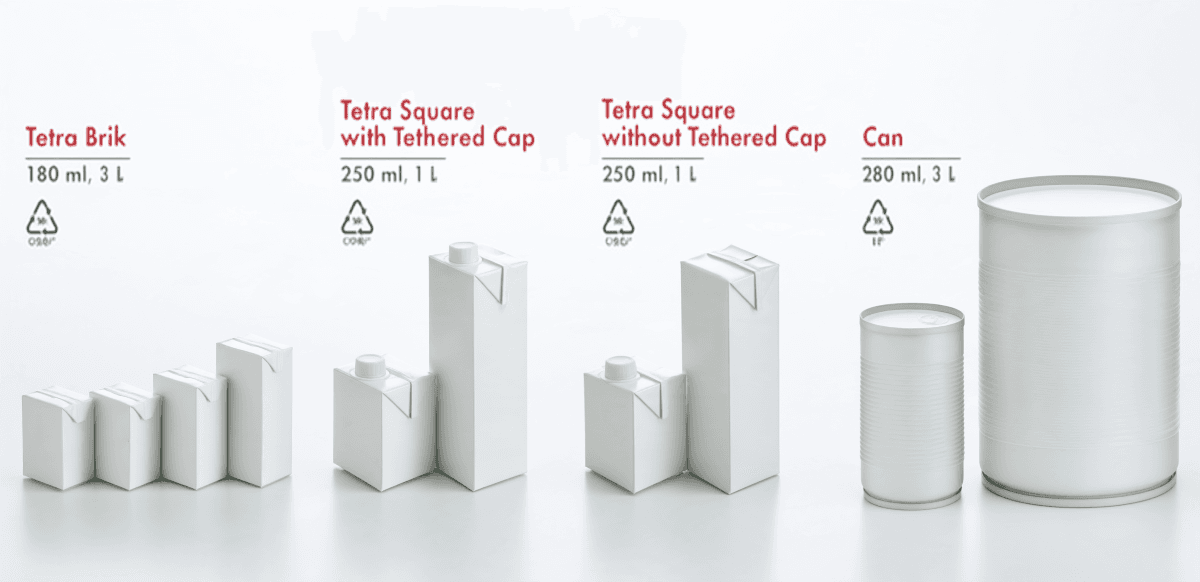
Coconut milk carton vs can comes down to four retail decisions: the aisle, the shopper, the shelf space and the price point. Keep the 400 ml can as your core cooking line in the international aisle, and add cartons where shoppers pour, measure and reclose: the plant-based milk set, baking and coffee. CBL fills UHT coconut milk in Tetra Pak cartons from 65 ml to 1 L and canned coconut milk and cream in 200 ml, 400 ml and 3 L, in organic or conventional grades from 5% to 30% fat, with up to 18 months of unopened shelf life. Rectangular cartons also fit more packs per pallet and per shelf than round cans.
To choose between coconut milk in cartons and cans, decide where each pack sits, who buys it, how much shelf it takes and where it lands on your price ladder. This guide takes those decisions in order. It comes from the CBL Product Team, which makes coconut milk in both formats in Sri Lanka and Indonesia for supermarkets, buying groups and store brands in more than 40 countries.
Key takeaways
- Cans own the cooking mission. Cartons win in plant-based, baking and coffee sets.
- Cartons always face forward, pack tighter and need less store labor.
- Plan pack sizes as a price ladder, with the 400 ml can as the reference price.
- Give each format its own aisle, size and fat level so they add sales, not split them.
- Match fat levels and certifications across formats, so one spec covers the range.
The US market for coconut milk cartons and cans
US shoppers already know two coconut milks. The canned cooking product sits in the international or Asian aisle, and coconut milk beverage sits in the dairy-alternative set. A shelf-stable carton bridges the two: it cooks like the can and pours like the beverage.
What that means for a US range:
- Match the pack to the banner. Conventional grocers suit a 400 ml can plus a 1 L carton. Natural and organic chains reward organic and Fairtrade lines in either format.
- Clubs buy by the case. Multi-packs of 1 L cartons or trays of cans sell better there than single units.
- Packaging fees are arriving. A growing number of states run packaging extended producer responsibility (EPR) schemes, so check how each format is treated in the states you sell in.
- Imports run through your FSVP importer. CBL ships with the documents US importers ask for, from FDA-registered facilities.
Carton or can: what changes on the shelf
The product inside can be the same. What changes is shape, opening, size range and where the pack belongs in your store. Compare the two on the points your category team works with.
What retailers compare | Carton (Tetra Pak) | Can |
Pack shape | Rectangular, label always faces out | Round, needs facing up |
CBL pack sizes | 65 ml, 200 ml, 250 ml, 330 ml, 500 ml, 1 L | 200 ml, 400 ml, 3 L |
Opening | Tear-off on small packs, tethered screw cap on 500 ml and 1 L | Ring-pull or opener, no reclose |
Weight | Light paperboard | Heavier steel |
Natural aisle | Plant-based, baking, coffee | International, Asian cooking |
Main shopper use | Pour, measure, reclose, drink | Cook one full recipe |
Fat levels (CBL) | 5–30% | 5–30% |
Unopened shelf life | Up to 18 months [confirm] | Up to 18 months |
Store-brand print | Full-wrap print to the Tetra Pak dieline | Lithographed can or paper label |
For how each pack is processed, and how flavor and color differ, see Canned, Tetra Pak, Bag-in-Box or Drum: Choosing a Coconut Milk Format.
Match each pack to an aisle and a shopper
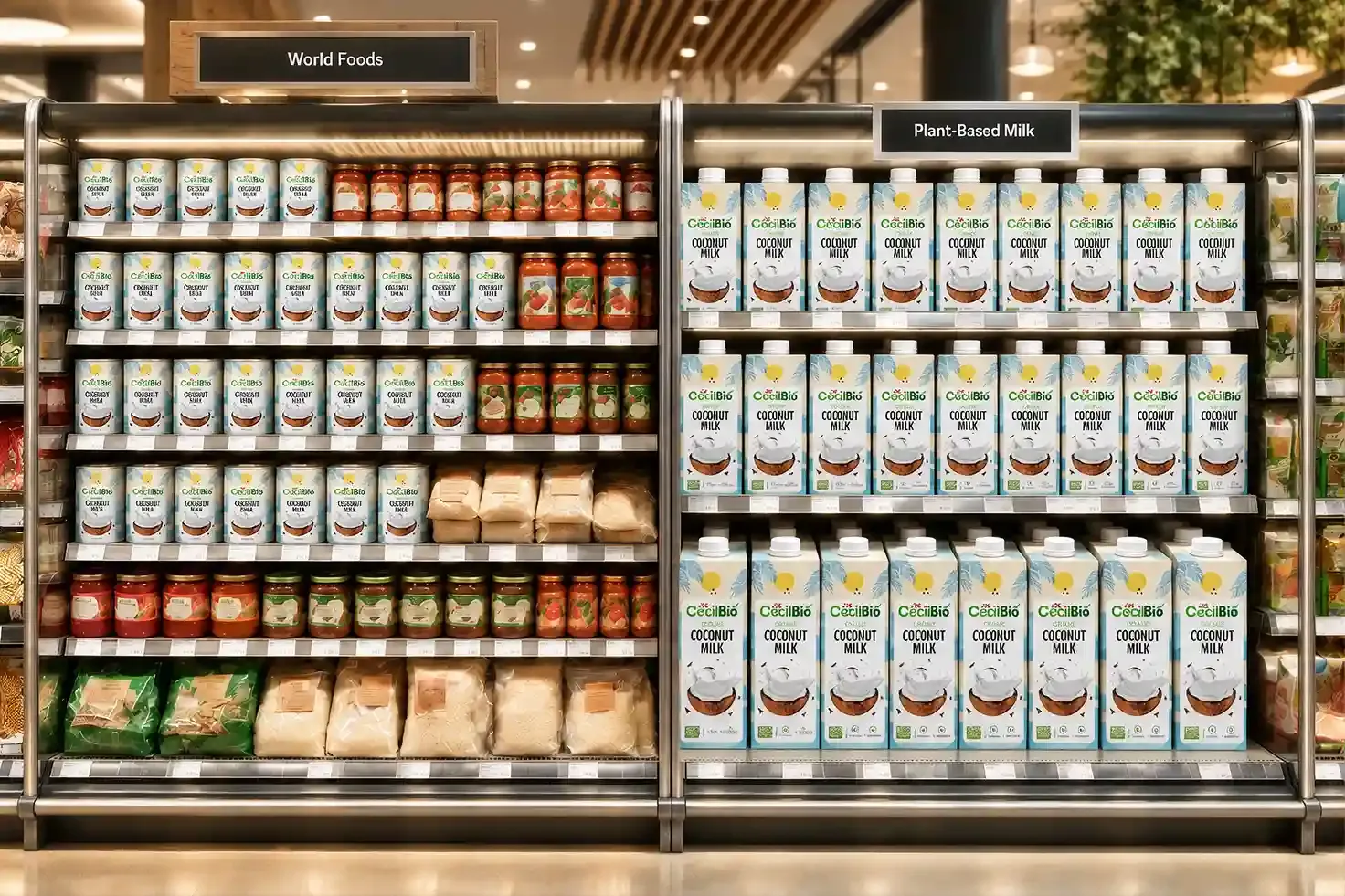
List by shopper mission, not by habit. Each format serves a different trip, and each trip lives in a different part of the store.
Shopper | What they need | Best pack | Where to place it |
Weekly curry cook | One full recipe, often full fat | 400 ml can | International aisle, multi-buy |
Plant-based drinker | Light milk for coffee, cereal, smoothies | 1 L carton with cap | Plant-based milk set |
Home baker | A measured amount of cream | 200 ml carton of coconut cream | Baking aisle |
Small household | A pack to close and keep for a few days | 330 ml or 500 ml carton | Cooking aisle, beside cans |
Small restaurant, club member | Volume at a low unit cost | 3 L can | Foodservice or club aisle |
Cartons travel further across the store than cans. That gives one carton listing more chances to earn a second facing.
Shelf space, facings and store labor
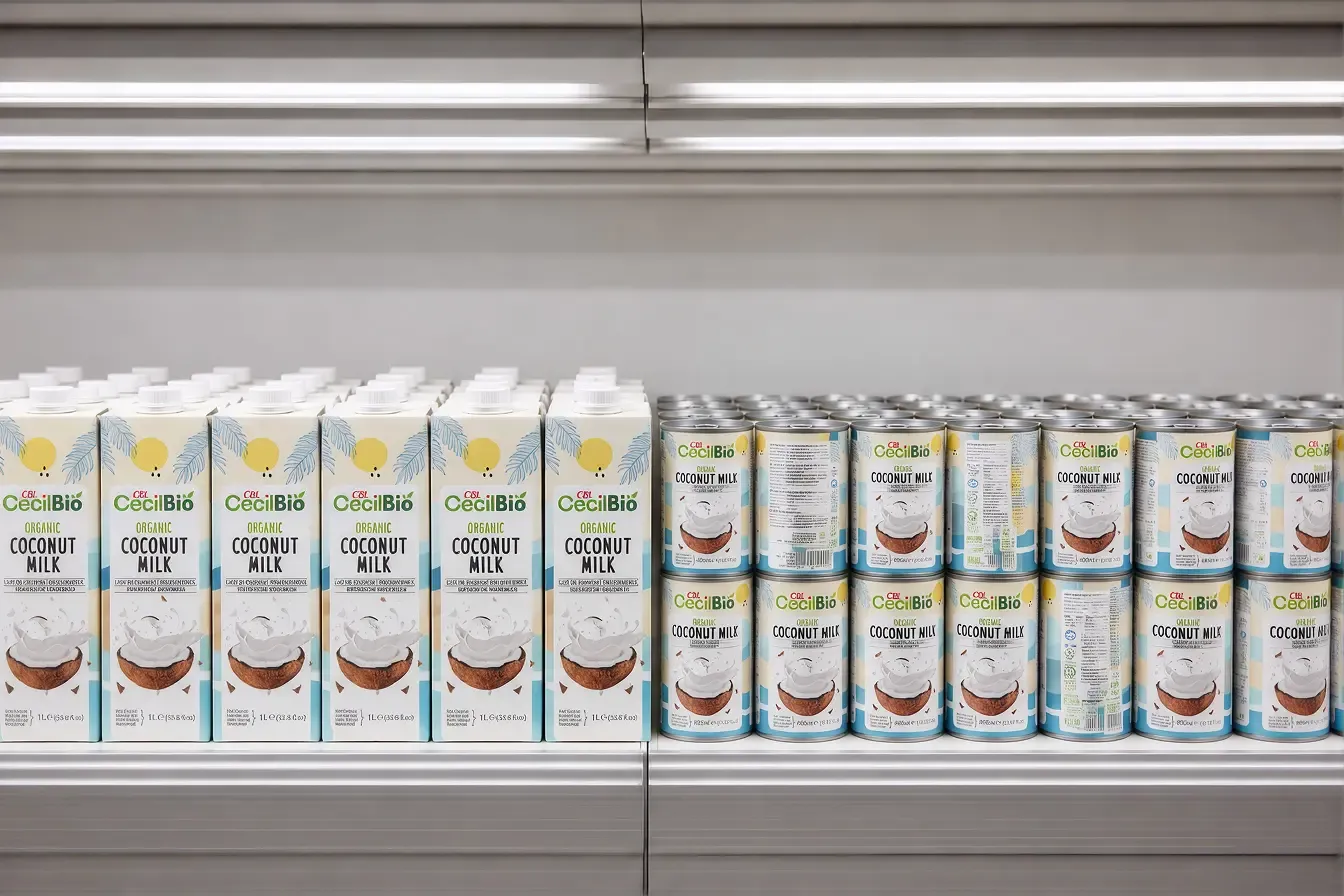
Shape drives shelf economics. A rectangular carton packs tighter than a cylinder, on the pallet and on the shelf. Tetra Pak's published figures for its rectangular food cartons show 10–20% more product per pallet than cans, and shelf-stacking up to 30–50% faster. Those figures come from a different Tetra Pak carton, so use them as direction and test with your own planogram.
- No facing up. A carton's front panel always faces the shopper, so the shelf looks full with less staff time.
- Fewer markdowns. A dented can is often reduced or thrown out. A dropped carton usually stays sellable.
- A stronger brand block. Full-wrap carton print turns a row of facings into one wall of your store brand.
- Cans still win on display. Cans stack high in end caps and multi-buy towers, and shoppers trust them as the standard cooking pack.
Build a price ladder with pack sizes
Plan the ladder before you plan the facings. Pack size sets your shelf price, and the two formats cover different steps.
Shelf role | Carton size | Can size |
Entry price, single use, meal kits | 65 ml or 200 ml | 200 ml |
Core recipe pack | 250 ml or 330 ml | 400 ml |
Family and frequent users | 500 ml or 1 L with cap | — |
Foodservice and club | — | 3 L |
- Anchor on the 400 ml can. It is the price shoppers compare everything else against.
- Price the 330 ml carton close to it. Shoppers trade a little volume for a pack they can reclose.
- Let the 1 L carton carry a higher ticket. It lasts across several uses, so the cost per use feels fair.
- Start narrow. Two carton sizes and one can size are enough for a first listing.
Planning a store brand in cartons? Our guide to launching own-label coconut milk in Tetra Pak covers print runs and timelines.
Plan a two-format coconut milk range
Most retailers do best with both formats, each in a clear role. Use this four-tier structure so the packs add sales instead of splitting them.
- Core. A 400 ml full-fat canned coconut milk in the cooking aisle, at your opening price.
- Convenience. A 1 L UHT coconut milk carton with a cap, in a lighter fat level, in the plant-based milk set.
- Baking and premium. A 200 ml carton of coconut cream, plus an organic line in either format.
- Value and foodservice. A 3 L can for club members and small restaurants.
Keep the fat level and certification the same across formats where you can. One specification then covers the range, and your quality team approves one certificate set.
No artwork ready yet? Retailers can list CecilBio, CBL's own organic retail brand of coconut milk and coconut water, while a store-brand range is developed.
Planning a carton and can range?
Send us your markets, sizes and target fat levels. Our export team replies within two business days.
Packaging claims shoppers read
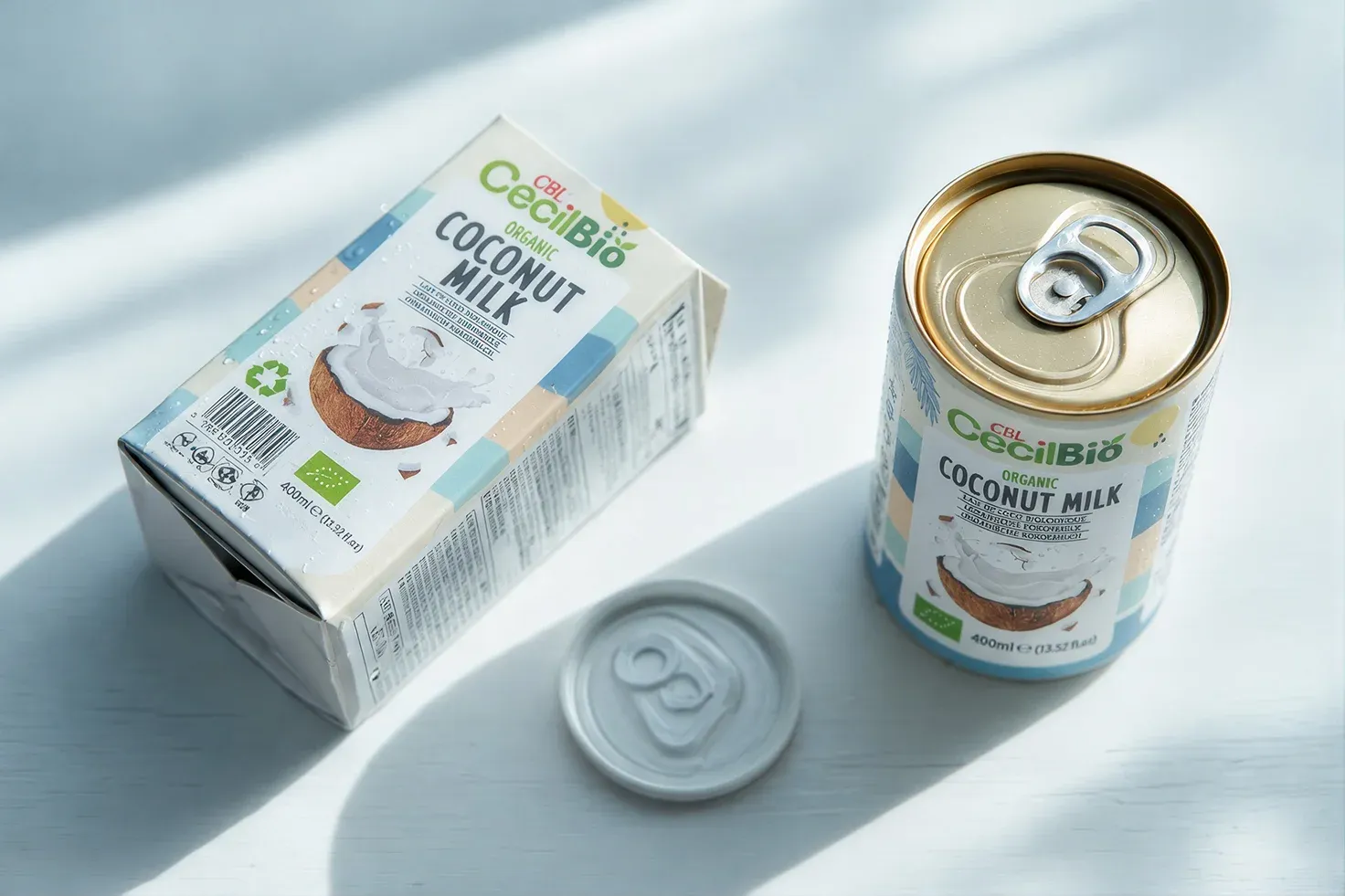
Packaging is part of the buying decision now. Give each format a clear, checkable on-pack story.
Claim | Carton | Can |
Material | Mainly paperboard; CBL store-brand cartons use FSC-certified board | Steel |
Recycling | Recyclable where local programs collect cartons | Widely collected and recycled |
Lining | No metal contact with the product | BPA-NI lining |
Reclose | Tethered cap on 500 ml and 1 L | None |
Organic and ethical seals | USDA Organic, Fairtrade and others | Same options as cartons |
Check local rules before printing any recycling claim, because carton collection varies by city and state.
How to choose a supplier for both formats
One supplier for both formats keeps your specs, certificates and shipments in one place. Ask these questions before you sign.
- Do you fill both formats yourself? A third-party filler adds a traceability break. CBL fills cartons and cans in its own plants.
- Can you match fat levels across formats? Shoppers notice when the carton and can taste different.
- Which certifications cover both lines? CBL holds BRC, FSSC 22000, ISO 22000, USDA Organic, EU Organic, JAS, Naturland, Bio Suisse, KRAV, Fairtrade, Halal and Kosher. See our certificates.
- Do you have more than one origin? CBL produces in Sri Lanka and Indonesia, which spreads supply risk for buying groups.
- What are the print minimums per carton size? Smaller cartons need larger print runs.
- Can you send both formats side by side? A joint sample makes your range review faster.
From range review to first delivery
A two-format launch follows five steps. Plan the carton timeline first, because print adds lead time.
- Range review. Agree the sizes, fat levels and grades for each format.
- Samples. Taste and test carton and can samples side by side.
- Artwork. Approve the carton dieline and can label, with your claims and certification seals.
- Production. For cartons, plan about three months to the first shipment and about eight weeks for repeat orders. Confirm can lead times at quote stage.
- Delivery and review. Track sales by format for 12 weeks, then adjust facings.
Frequently asked questions
Yes. Club shoppers buy for the pantry, so they look for value per liter and a pack that lasts. Multi-packs of 1 L cartons with tethered caps suit them, because each carton reseals and can be used over several days. Cans sell best in trays of 6 to 12, priced below single-unit grocery prices. Keep the shipper tray print-ready, because club stores often display product in its outer case. Match fat levels to your grocery range so members see the same product at a better unit price.
Several US states now have packaging EPR laws that make brand owners pay toward collecting and recycling their packaging. Fees and reporting rules differ by state and by material, so cartons and steel cans can be charged differently. If you sell under your own label, you are usually the obligated producer. Ask your supplier for the weight and material breakdown of each pack, because you need those numbers to report. CBL provides packaging specifications for every carton and can size it supplies.
Neither is better on its own; each wins a different shopper. Cans are the standard pack for cooking, so a 400 ml can belongs in the international aisle as your core line. Cartons suit shoppers who pour, measure and reclose, such as plant-based drinkers, home bakers and small households. Cartons also pack tighter on pallets and shelves and always show the front label, which saves store labor. Most retailers get the best result by listing both, with each format in its own aisle, size and price point.
Most supermarkets should stock both. Start with a 400 ml full-fat can in the cooking aisle, because it is the pack most shoppers already know and compare prices against. Then add one or two carton sizes where cans do not sell well: a 1 L carton with a cap in the plant-based milk set and a 200 ml carton of coconut cream in the baking aisle. Smaller stores can start with the can plus one carton and add sizes once sales data shows which mission is growing.
They overlap less than many buyers expect, provided each format has a clear job. A curry cook buying a 400 ml can is on a different trip from a shopper buying a 1 L carton for coffee or smoothies. Overlap grows when both formats sit side by side at the same size, fat level and price. To avoid it, place cans in the cooking aisle and cartons in the plant-based or baking aisles, use different sizes and fat levels, and track sales by format for at least 12 weeks before changing facings.
Place them where shoppers use them. A 1 L carton of lighter coconut milk sells best in the shelf-stable plant-based milk set, next to oat, almond and soy drinks. A 200 ml carton of coconut cream fits the baking aisle, near flour, sugar and dessert ingredients. A 330 ml or 500 ml carton can sit beside cans in the international aisle as a reclosable option for small households. Because cartons are shelf-stable, they do not need refrigerated space until opened.
The most useful sizes are 200 ml, 330 ml and 1 L. The 200 ml carton gives an entry price point and suits baking and single recipes. The 330 ml carton sits close to the 400 ml can on price and appeals to shoppers who want a pack they can reclose. The 1 L carton with a tethered cap suits frequent users and the plant-based milk set. CBL also fills 65 ml cartons for meal kits and sampling, and 250 ml and 500 ml cartons for other size needs.
Rectangular cartons fit more packs into the same space than round cans, because there are no gaps between packs. Tetra Pak's published figures for its rectangular food cartons show 10 to 20 percent more product per pallet than cans and up to 30 to 50 percent faster shelf-stacking. Those figures come from a different carton type, so treat them as a guide. The best test is your own planogram: set a carton bay and a can bay of equal width and count the facings and units each holds.
Yes. CBL supplies Tetra Pak coconut milk and cream and canned coconut milk and cream under private label, in organic and conventional grades from 5 to 30 percent fat. You can match the fat level, certification and recipe across both formats, so shoppers get the same product whichever pack they choose. Cartons are printed to the Tetra Pak dieline for your chosen size, and cans can be lithographed or paper-labeled. Your quality team then approves one specification and one certificate set.
For cartons, the main driver is the print run. Each carton design and size has its own print minimum, and smaller cartons need larger print runs. Fewer designs and larger sizes keep your first commitment small. For cans, minimums depend on can size and whether you choose lithographed cans or paper labels. Fat level, organic certification and the number of SKUs per container also affect price. Ask your supplier for a quote that shows the print minimum per design for each size.
Coconut milk cartons are made mainly from paperboard, with thin layers that protect the product. CBL's store-brand cartons use FSC-certified paperboard and are recyclable wherever local programs collect beverage cartons. Collection rules differ by state and city, so check local rules before printing a recycling claim. Steel cans are widely collected and recycled. Whichever format you choose, keep on-pack recycling claims specific to where the product will be sold.
Yes, and many buying groups prefer it. A single origin exposes your range to one harvest, one port and one set of weather risks. CBL produces coconut milk in both Sri Lanka and Indonesia, so buying groups can split volumes or switch origin if supply tightens. Ask that both origins work to the same specification and certification, so the product on shelf stays consistent whichever plant it comes from. Check that origin labeling on pack matches the plant that filled each batch.
The CBL Product Team
Product development & export · Minuwangoda, Sri Lanka
Written by the team that standardises fat bands on our BRC AA++ lines and answers buyer spec questions daily. Fact-checked against current production specifications, July 2026.