Coconut Milk in Cartons or Cans? A Retailer's Guide for Belgium
Deciding whether your coconut milk range should sit in cartons, cans or both? This guide from a Sri Lankan coconut milk manufacturer shows Belgian retail buyers how each pack performs on shelf, which shopper it serves, and why multilingual labels make the format choice matter more in Belgium.
By the CBL Product Team
·
Published
·
Updated
·
8 min read
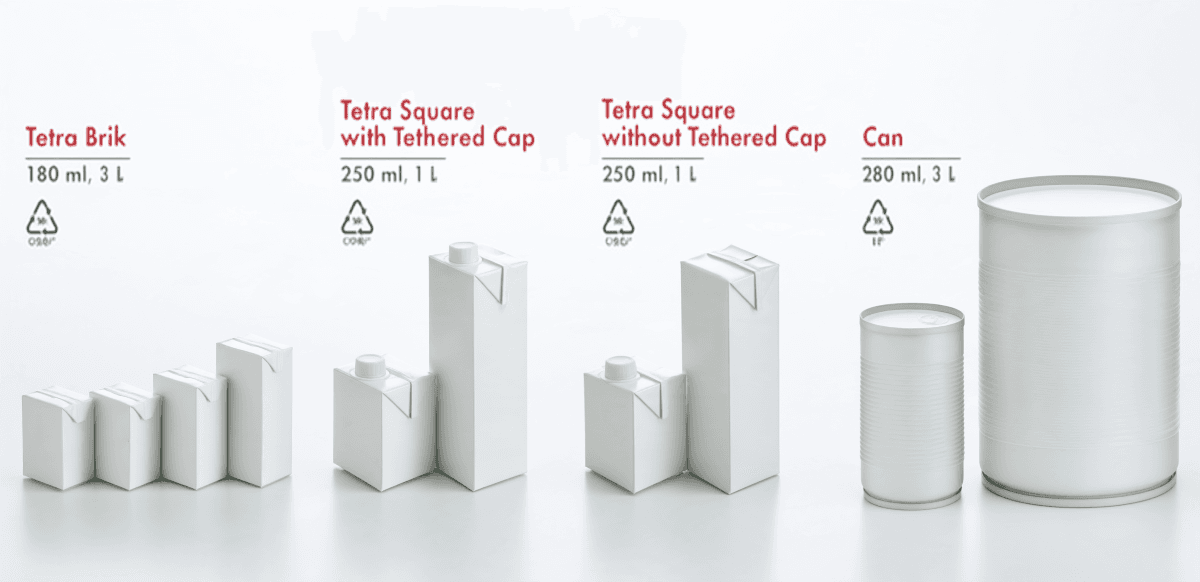
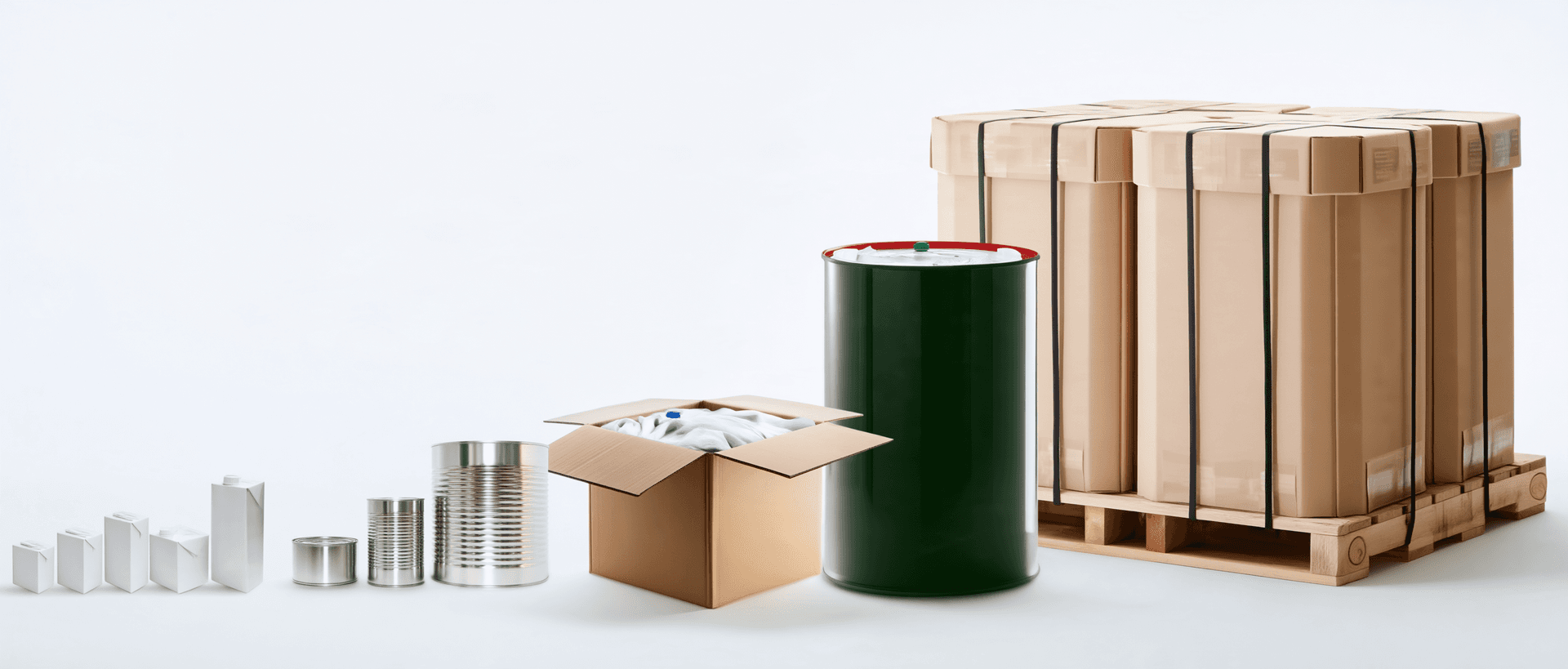
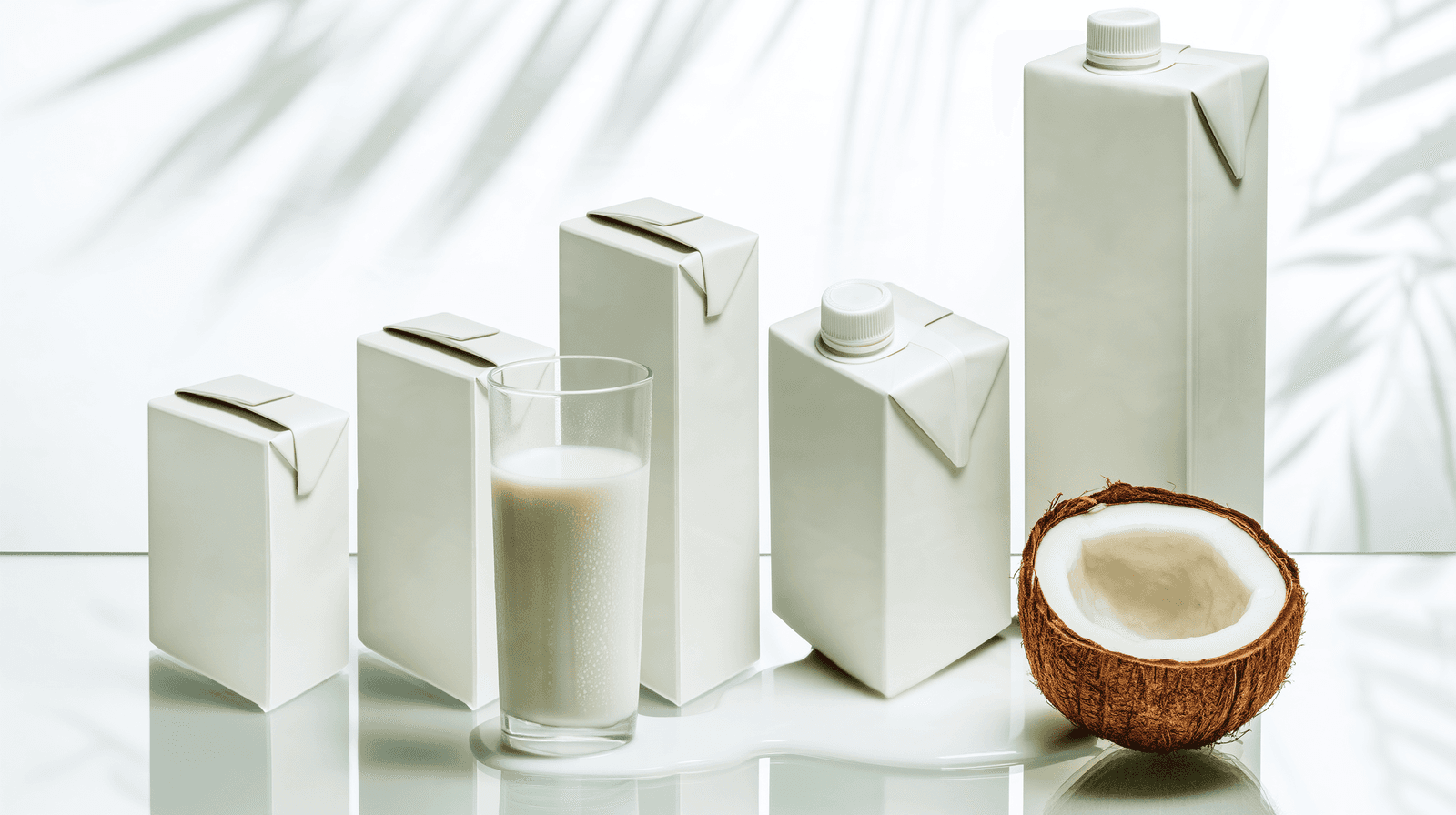
Belgian national chains sell the same pack in Dutch-, French- and German-speaking regions, so store-brand packs usually carry mandatory information in Dutch and French, often with German too. That makes label space a real factor. A 1 L Tetra Square carton has four large panels, which fit three languages more easily than a 400 ml can label. CBL fills UHT coconut milk in Tetra Pak cartons from 65 ml to 1 L and canned coconut milk and cream in 200 ml, 400 ml and 3 L, from 5% to 30% fat.
To choose between cartons and cans, decide where each pack sits, who buys it, how much shelf it takes and how much label space you need. This guide comes from the CBL Product Team, which makes coconut milk in both formats in Sri Lanka and Indonesia.
Key takeaways
- National store brands usually need Dutch and French labels, often German too.
- Cartons give more flat label space for three languages than a can.
- Cans own the world-foods aisle; cartons win in plant-based drinks and baking.
- The EU packaging regulation applies directly from 12 August 2026.
- Design the carton first, then adapt the can label from it.
The Belgian market for coconut milk cartons and cans
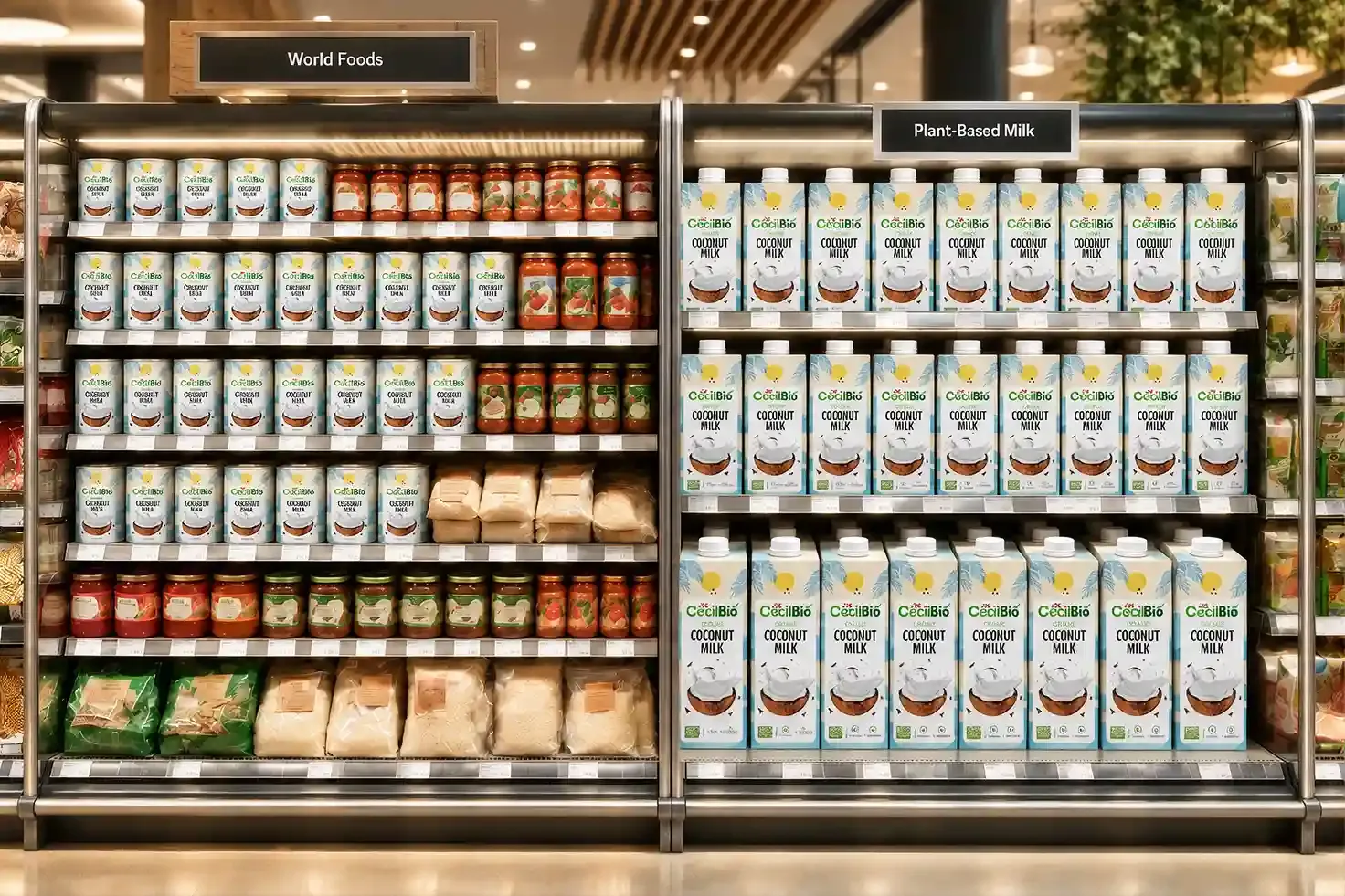
In Belgium the 400 ml can is the reference pack in the world-foods aisle. Cartons gain space in plant-based drinks and baking, where shoppers want to pour and reclose.
What that means for a Belgian range:
- Multilingual by default. Plan Dutch and French on every national pack, and German where you sell in the German-speaking region.
- Label space decides. The more languages you print, the more the carton's flat panels help.
- Port of entry. Many Belgian importers bring stock through Antwerp; plan pallet and case configurations for that route.
- EU packaging rules. The EU packaging regulation applies directly from 12 August 2026.
Carton or can: what changes on the shelf
What retailers compare | Carton (Tetra Pak) | Can |
Label space for three languages | Four flat panels | One curved label |
CBL pack sizes | 65 ml, 200 ml, 250 ml, 330 ml, 500 ml, 1 L | 200 ml, 400 ml, 3 L |
Opening | Tear-off on small packs, tethered screw cap on 500 ml and 1 L | Ring-pull or opener |
Pack shape | Rectangular, label always faces out | Round, needs facing up |
Natural aisle | Plant-based drinks, baking | World foods |
Main shopper use | Pour, measure, reclose | Cook one full recipe |
Fat levels (CBL) | 5–30% | 5–30% |
For processing, flavour and colour, see our coconut milk format guide.
Match each pack to an aisle and a shopper
Shopper | What they need | Best pack | Where to place it |
Curry cook | One full recipe | 400 ml can | World foods |
Plant-based drinker | Light milk to pour | 1 L carton with cap | Plant-based drinks |
Baker | A measured amount of cream | 200 ml carton | Baking |
Small household | A pack to close and keep | 330 ml or 500 ml carton | Beside cans |
Foodservice | Volume | 3 L can | Cash-and-carry |
Shelf space, facings and store labour
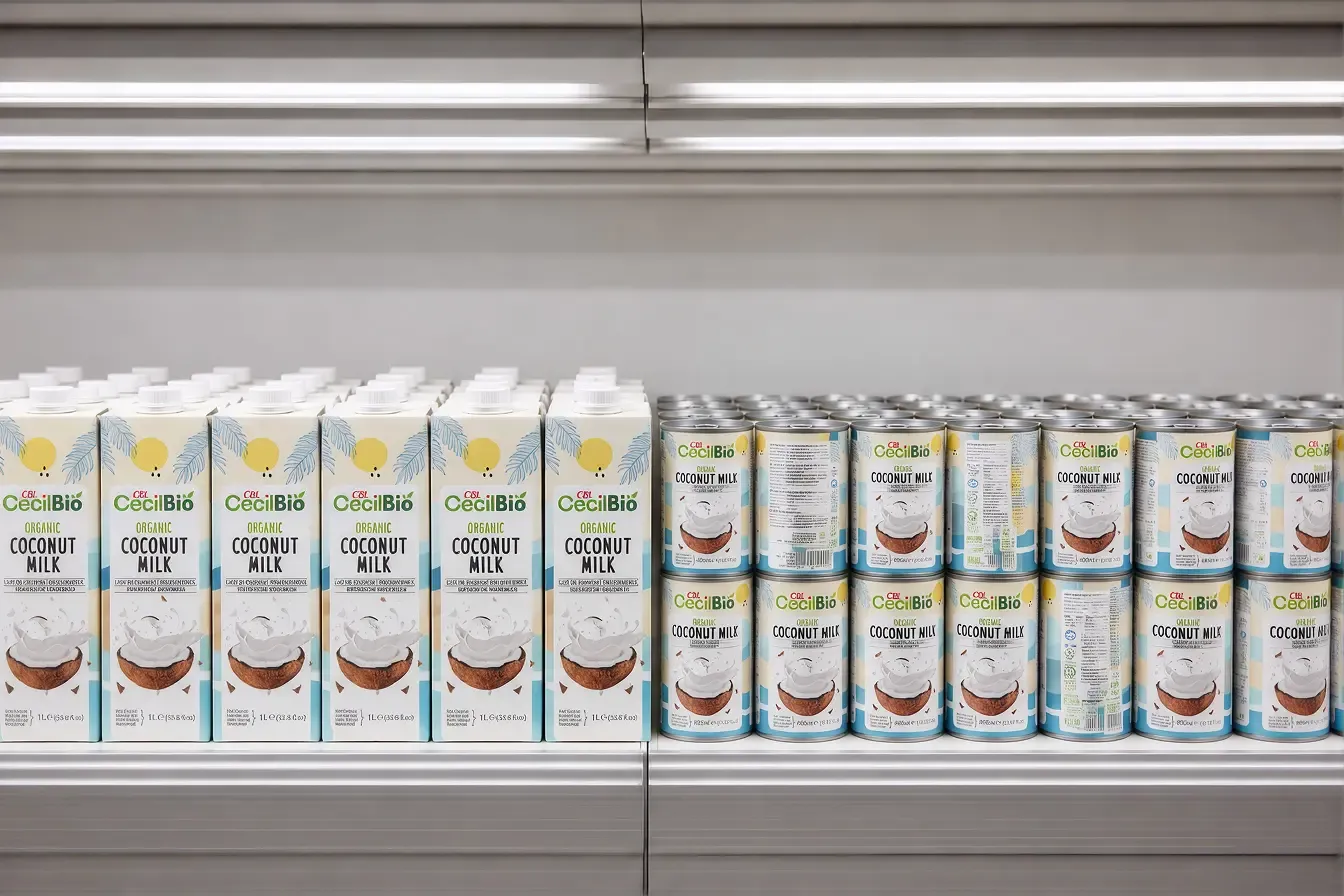
Tetra Pak's published figures for its rectangular food cartons show 10–20% more product per pallet than cans, and shelf-stacking up to 30–50% faster. Those figures come from a different carton, so use them as direction. Cartons always face forward, so the language panel you choose stays visible.
Build a price ladder with pack sizes
Shelf role | Carton size | Can size |
Entry price | 65 ml or 200 ml | 200 ml |
Core recipe pack | 250 ml or 330 ml | 400 ml |
Family | 500 ml or 1 L with cap | — |
Foodservice | — | 3 L |
Anchor on the 400 ml can and let the 1 L carton carry a higher ticket. Planning a store brand? See our guide to launching own label coconut milk in Tetra Pak.
Plan a two-format coconut milk range
- Core. A 400 ml canned coconut milk in world foods.
- Convenience. A 1 L UHT coconut milk carton with a cap in plant-based drinks.
- Baking and premium. A 200 ml carton of coconut cream, or an organic line.
- Foodservice. A 3 L can.
No artwork yet? List CecilBio while your store-brand range is developed.
Planning a carton and can range for Belgium?
Send us your sizes, languages and fat levels. Our export team replies within two business days.
Labels and claims for Belgium
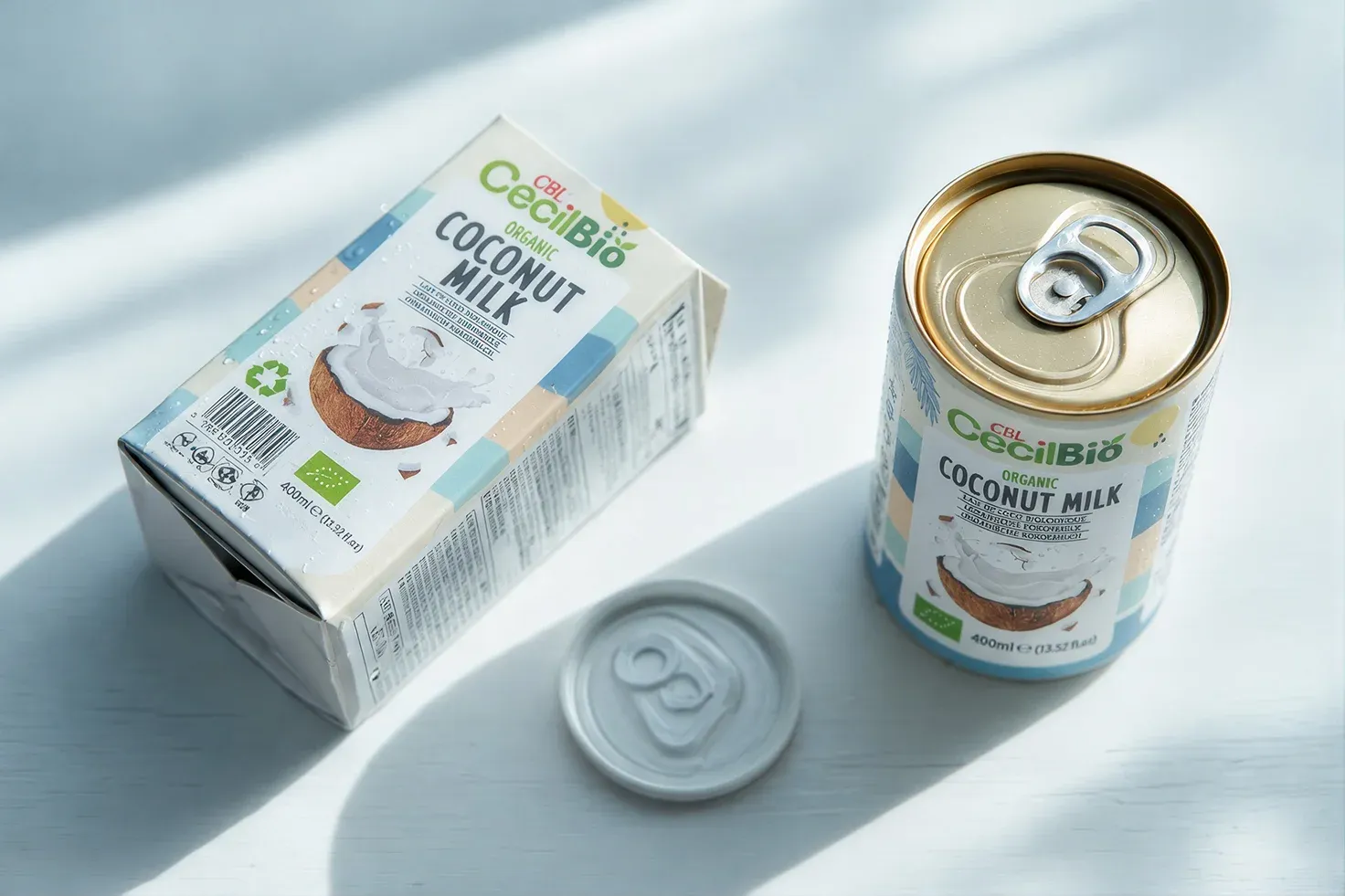
Element | Carton | Can |
Languages | Dutch, French, often German, across four panels | Same, on one label with smaller text |
Organic | EU Organic logo | EU Organic logo |
Lining | No metal contact | BPA-NI lining |
Reclose | Tethered cap on 500 ml and 1 L | None |
Material | Mainly paperboard; FSC-certified board | Steel |
How to choose a supplier for both formats
- Do you fill both formats yourself? CBL fills cartons and cans in its own plants.
- Can you print multilingual artwork? CBL prints to your approved artwork on the Tetra Pak dieline.
- Which certifications cover both lines? CBL holds BRC, FSSC 22000, ISO 22000, EU Organic, Fairtrade, Halal and Kosher, among others. See our certificates.
- Can you supply PPWR documents?
- Do you have more than one origin? CBL produces in Sri Lanka and Indonesia.
From range review to first delivery
- Range review. Agree sizes, fat levels and label languages.
- Samples. Test carton and can samples side by side.
- Artwork. Approve multilingual artwork, carton first.
- Production. For cartons, plan about three months to the first shipment and about eight weeks for repeats.
- Delivery and review. Track sales by format for 12 weeks.
Frequently asked questions
Mandatory food information must be in the language of the region where the product is sold: Dutch in Flanders, French in Wallonia, and German in the German-speaking region. Brussels is bilingual. National chains therefore usually print Dutch and French on every pack, and often German too, so one design can sell nationwide. Check the final wording with your regulatory team. CBL prints store-brand cartons and can labels to your approved multilingual artwork.
A carton is usually easier. A 1 L Tetra Square or 330 ml Tetra Brik prints on every panel, so ingredients, allergens and nutrition can sit in three languages without crowding. A 400 ml can label wraps around a curved surface with less flat space, so multilingual text must be smaller. If you list both formats, design the carton first and adapt the can label from it. That keeps the brand look consistent across the range.
Neither on its own. Cans anchor the world-foods aisle; cartons suit shoppers who pour and reclose, and they carry multilingual labels more easily. Most retailers list both, each in its own aisle, size and price point.
They overlap less than expected when each has a clear job. Place cans in world foods and cartons in plant-based drinks or baking, and track sales by format for 12 weeks.
The 1 L carton with a cap for plant-based drinks and the 200 ml carton of coconut cream for baking. CBL also fills 65 ml, 250 ml, 330 ml and 500 ml cartons.
Rectangular cartons fit more packs into the same space. Tetra Pak's figures for its rectangular food cartons show 10 to 20 per cent more product per pallet than cans. Treat them as a guide.
Yes. CBL supplies both under private label, from 5 to 30 per cent fat, with matching fat levels and certification.
For cartons, the print run per design. One multilingual design per size keeps the number of designs, and the commitment, small. For cans, minimums depend on size and print method.
Cartons are made mainly from paperboard and are collected in Belgium's household packaging collection. CBL's store-brand cartons use FSC-certified board. Check current sorting rules before printing a recycling claim.
A recognised food safety certificate such as BRCGS, IFS or FSSC 22000, plus EU Organic for organic lines. CBL holds BRC, FSSC 22000, ISO 22000, EU Organic, Fairtrade, Halal and Kosher, among others; see our certificates.
The PPWR applies directly from 12 August 2026. Ask your supplier for the declaration of conformity and technical documentation for each pack.
About three months from artwork approval to the first carton shipment, and about eight weeks for repeats. Allow extra time for multilingual artwork checks, plus ocean freight to Antwerp.
The CBL Product Team
Product development & export · Minuwangoda, Sri Lanka
Written by the team that standardises fat bands on our BRC AA++ lines and answers buyer spec questions daily. Fact-checked against current production specifications, July 2026.